Beyond Retrieval: Building Self-Healing AI Agents with Agentic RAG and MCP
Why traditional RAG breaks in production and how Agentic RAG with MCP enables reliable, self-healing AI systems.
Practical fixes, shipped as working code.
Why traditional RAG breaks in production and how Agentic RAG with MCP enables reliable, self-healing AI systems.
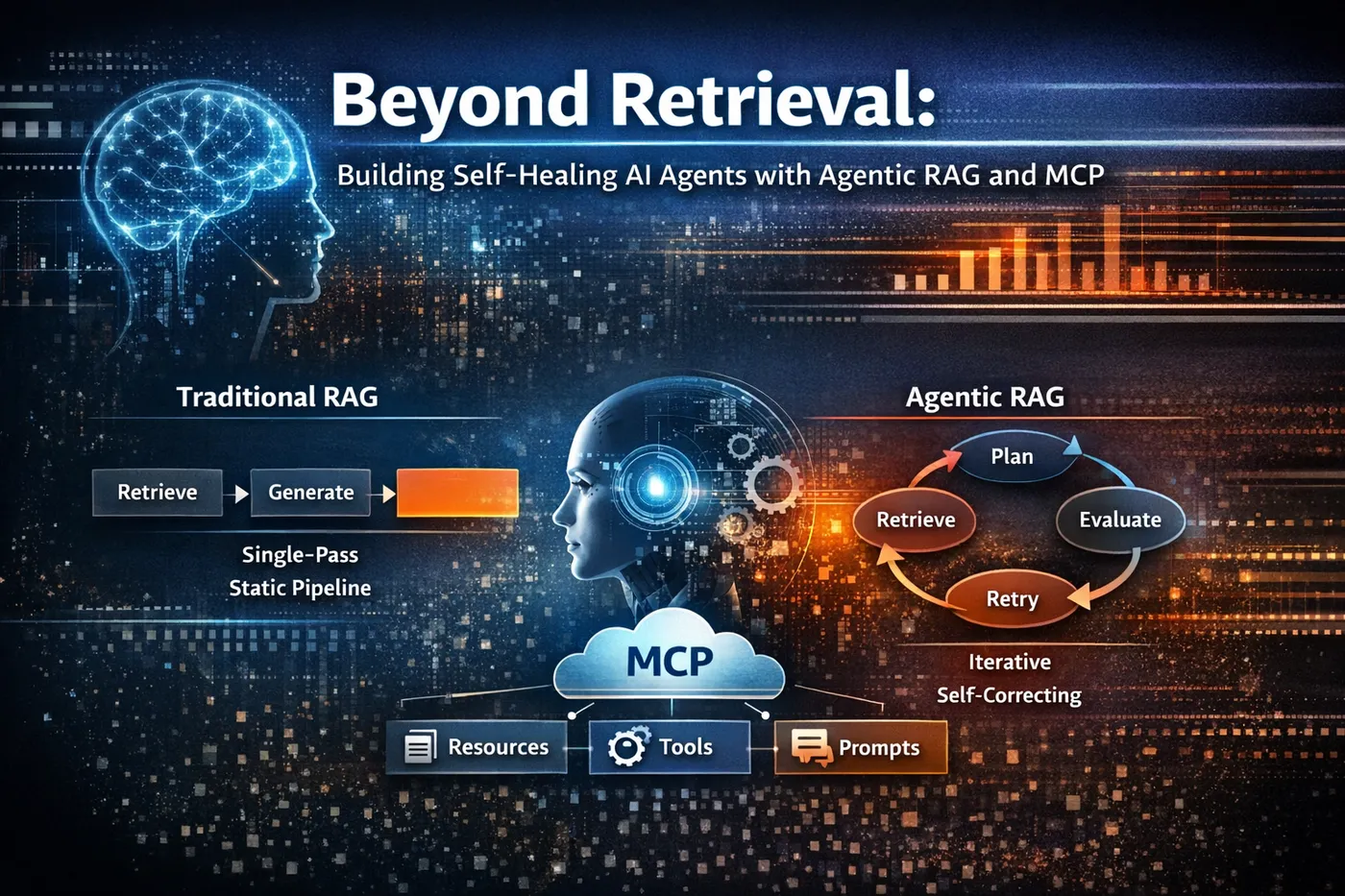
Retrieval-Augmented Generation (RAG) marked an important milestone in grounding large language models in external knowledge. By coupling generation with retrieval, it reduced hallucinations and improved factual accuracy. However, as AI systems moved from demos into production, the architectural limits of traditional RAG became impossible to ignore.
Classic RAG pipelines are fundamentally stateless, single-pass, and deterministic. A query is embedded, a vector search retrieves top-k chunks, those chunks are appended to a prompt, and the model generates an answer. This approach works for simple fact lookups but breaks under real-world complexity: dynamic systems, multi-step reasoning, long-running tasks, and unreliable dependencies.
In 2026, the challenge is no longer “How do we retrieve documents?” but “How do we build AI systems that can adapt, recover, and operate reliably?”
The answer lies in Agentic RAG combined with the Model Context Protocol (MCP).
Traditional RAG systems fail not because of weak models, but because of rigid architecture.
RAG performs exactly one retrieval per query. There is no mechanism to assess whether the retrieved documents are sufficient. If retrieval fails—due to vocabulary mismatch, poor chunking, or embedding drift—the system proceeds anyway, producing confident but incorrect answers.
The same top-k, similarity thresholds, and embedding models are applied to every query. Simple questions are over-retrieved; complex investigative queries are under-retrieved.
Traditional RAG assumes knowledge bases are relatively static. In reality, APIs evolve, dashboards change, logs stream continuously, and documentation lags behind implementations.
There is no evaluation of answer quality feeding back into retrieval. The system cannot detect hallucinations, contradictions, or missing context.
The result is brittle automation that fails silently—an unacceptable property for production systems.
Agentic RAG reframes retrieval as goal-directed behavior rather than a preprocessing step.
An agent:
This mirrors how experienced engineers investigate problems—iteratively, skeptically, and adaptively.
The most useful mental model for Agentic RAG is a self-healing control system, not a pipeline.
Traditional RAG is open-loop. Agentic RAG is closed-loop by design.
Self-healing is not a buzzword—it is an engineering property.
A self-healing agent can:
Key signals include retrieval coverage, relevance scores, hallucination likelihood, latency anomalies, and cost spikes. Recovery strategies are chosen based on failure type, not blind retries.
Robust agentic systems implement layered feedback loops:
This hierarchy prevents thrashing while enabling continuous improvement.
Agentic behavior collapses without reliable access to tools and state.
The Model Context Protocol (MCP) standardizes how AI systems access:
MCP decouples reasoning from execution. Agents no longer hard-code integrations; they discover and use capabilities dynamically through a stable contract.
Most failures are state failures.
Sessions expire. Processes restart. Long-running tasks break.
MCP sessions formalize persistence:
This mirrors reliable browser session design: checkpointing, retries, and graceful degradation.
Agentic RAG systems separate thinking from doing.
       import asyncio
from mcp_client import MCPClient, ToolSession
from browser_use import Browser

async def research_agent(topic: str):
    mcp = MCPClient()

    async with ToolSession(
        name="research-session",
        persist=True
    ) as session:

        browser = Browser(session=session)

        page = await browser.search(topic)
        await page.open_first_result()

        findings = await page.extract_text()

        await mcp.store(
            key="research_notes",
            value=findings,
            metadata={"topic": topic}
        )

        return findings

asyncio.run(research_agent("OAuth 2.1 backward compatibility"))
The session—not the model—is what makes this reliable.
Agents log into dashboards, extract reports, detect schema drift, and retry when layouts change.
Hybrid retrieval with self-correction dramatically reduces mean-time-to-resolution.
Multi-source synthesis with confidence scoring replaces manual document hunting.
These systems don’t just answer questions—they operate.
Self-healing agents require maturity stages:
Skipping robustness engineering is the most common failure mode.
RAG answered: What do we know?
Agentic RAG answers: What should we do next—and what if it fails?
With MCP and self-healing control loops, we move toward intent-based computing—systems that understand goals, manage state, and recover autonomously.
This is not about better prompts.
It’s about engineering for failure.
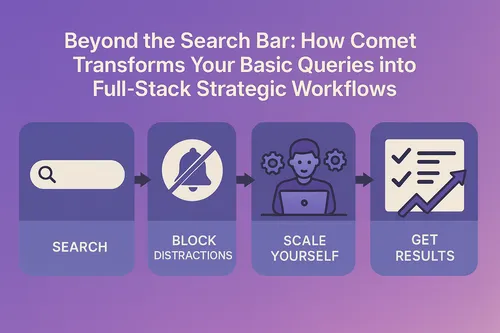 AI Automation
 Moving beyond simple queries to a full-stack AI system that blocks distractions and amplifies your deepest, most valuable work.
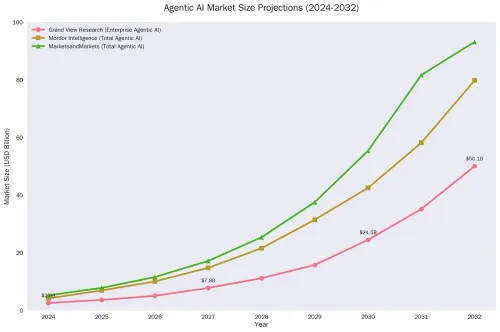 AI Automation
 An in-depth look at the breakthroughs, business transformations, and blockchain integrations defining the new era of AI.
 AI Automation
 Discover 10 powerful AI agent use cases built on n8n, from meeting managers to compliance auditors, that save time and cut busywork.